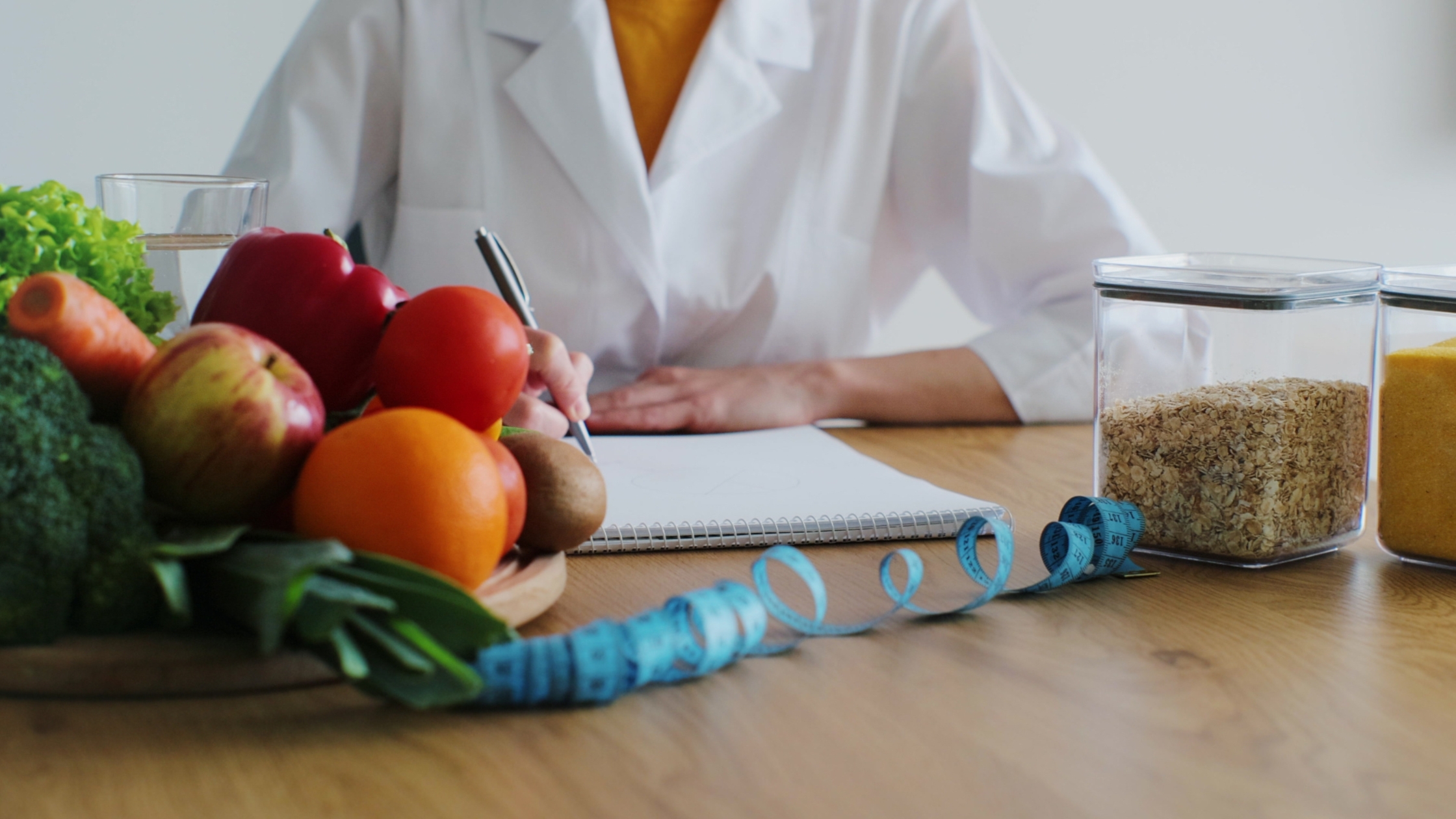




Have you ever noticed that body image gets louder when life feels out of control?
You never notice it during the calm, happy weeks, but during the ones when you wish for a break. Anxiety spikes that seem to come from nowhere. The moments when something feels unstable, unclear, or emotionally risky.
Suddenly, your body feels like the problem. Or the solution.
You think about what you ate. How you look. What needs tightening, improving, fixing. You promise yourself you’ll “get back on track.” You open the camera roll. You stand in front of the mirror longer than usual.
It can feel strangely regulating. This is where body image and control start to intertwine.
From the outside, it can look like appearance obsession. From the inside, it often feels like trying to steady yourself. When life feels unpredictable, the body becomes something you can monitor, measure, and manage. And that can create a temporary sense of control.
The Link Between Body Image and Control
Control is a safety strategy. Psychologically, when anxiety increases, the desire for predictability increases too. Your nervous system wants certainty. It wants something solid. Something you can influence.
Research on anxiety consistently shows that when people feel uncertain or threatened, they gravitate toward behaviours that restore a sense of control. Cognitive behavioural frameworks call these “safety behaviours.” They reduce discomfort in the short term, even if they reinforce anxiety long term.
The body is uniquely suited for this role. It’s visible, measurable, and it feels modifiable. You can track it. Restrict it. Adjust it. Evaluate it. You can promise to change it tomorrow.
So when uncertainty hits, your brain reaches for what feels manageable.That’s why body image and anxiety often move together. When your tolerance for uncertainty drops, your need for control rises. And that’s how safety behaviours maintain anxiety patterns.
How Body Image and Anxiety Show Up in Real Life
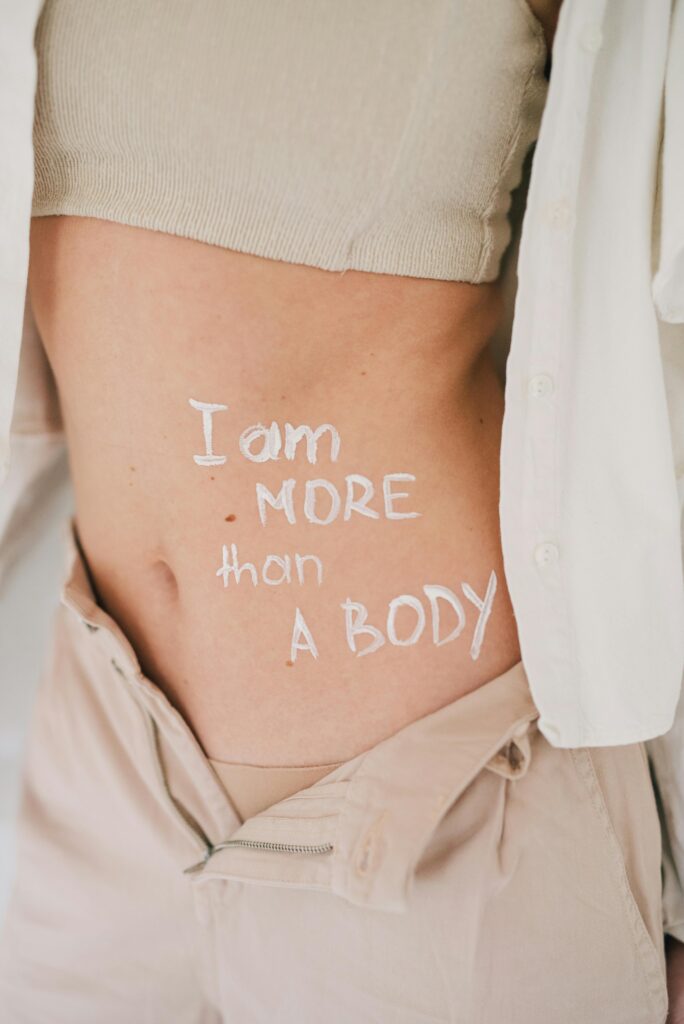
When body image becomes about control, it often looks practical on the surface. You might notice:
- becoming rigid about food during stress
- mirror checking more frequently
- body checking in reflective surfaces without meaning to
- tracking weight, measurements, or photos for reassurance
- trying to “perfect” yourself before a social event
- promising stricter routines when something else feels chaotic
This is body control disguised as discipline.
The pattern often sounds like:
“If I can just get my body together, I’ll feel better.”
“If I look right, I’ll feel more secure.”
“If I’m more controlled, I won’t feel this anxious.”
Body image and control can create a temporary sense of steadiness. When you focus on calories or angles or perceived flaws, you don’t have to sit with the breakup. Or the rejection. Or the uncertainty about your future.
It narrows the focus. And narrowing focus can calm an anxious system, briefly. But it comes at a cost.
Why Control-Based Body Image Patterns Don’t Create Safety
Control feels stabilising, but the stability it creates is fragile.
When body image becomes your primary regulator, self-worth becomes conditional. You feel steady when you’re “on track.” You feel shaky when you’re not. A single off-plan meal, a bloated day, a photo you don’t like can undo the sense of control you worked so hard to create.
This is where self-worth and control become entangled, and it often shows up in our minds like this:
If I’m disciplined, I’m worthy.
If I’m shrinking, I’m improving.
If I’m not managing my body well, I’m failing.
In the short term, body control reduces anxiety by giving you something to manage. In the long term, it increases hyperfocus. The more you monitor, the more your brain scans. The more it scans, the more “problems” it finds.
The original uncertainty is still there. Now you just have another layer of pressure sitting on top of it. And because control can feel productive, it’s easy to mistake it for healing.
The Impact on Confidence, Mood, and Relationships
Over time, control-based body image patterns affect more than appearance. They affect your mood, your relationships, and even your sense of ease in your own skin.
You might notice:
- irritability when routines are disrupted
- shame cycles after eating or social events
- emotional exhaustion from constant self-monitoring
- withdrawing from plans if you don’t feel “ready”
- increased anxiety around photos, dates, or intimacy
Body image and anxiety start feeding each other. The more anxious you feel, the more you tighten control. The tighter you control, the more fragile your stability becomes.
Relationships can feel harder, too. You may struggle to be present because you’re evaluating yourself in real time. Or you may avoid vulnerability because it feels safer to focus on body control than emotional exposure.
None of this means you’re vain or shallow. It means your nervous system learned that control equals safety.
Why Building Emotional Safety Matters More Than Body Control
The goal is to stop using your body as your main regulator. But what people often forget is that control depends on perfection, while safety allows for fluctuation.
When you build emotional safety, your self-worth isn’t determined by how tightly you’re managing yourself. You can have a messy day without collapsing into self-criticism. You can feel uncertain without turning your body into the problem.
This shift matters because control-based strategies repeat. Every new stressor triggers the same pattern: tighten, restrict, evaluate, promise to improve. Without awareness, it becomes automatic.
But once you understand that body image and control are linked through anxiety, the pattern becomes less mysterious. And less powerful.
How to Build Safety Without Relying on Control
You don’t need to rip away control overnight. That would likely spike anxiety. Instead, think in terms of gentle shifts.
1) Name uncertainty directly
Instead of tightening your body rules, ask: “What feels uncertain right now?”
Is it the relationship? Work? Your future? Naming the real stressor reduces the need to displace it onto your body.
2) Reduce body-checking windows
If you know mirror checking increases anxiety, set boundaries around it. Getting ready is different from repeated scanning. Less exposure to self-surveillance gives your nervous system space to settle.
3) Regulate first, evaluate later
When you feel the urge to fix your body, pause. Breathe. Ground your feet. Step away from your phone. Regulation reduces the urgency of body control.
4) Strengthen self-trust habits
Self-worth and control begin to separate when you keep small promises to yourself that have nothing to do with appearance. Rest when tired. Speak kindly after vulnerability. Show up consistently for your own needs.
5) Use structured support
If body image has become your go-to coping strategy, structured tools can help you untangle it. The thinking diary inside the Body Image Boost ebook is designed to help you track patterns between anxiety, thoughts, and body control without shame. Seeing the pattern clearly is often the turning point.
Learn More About Body Image and Creating Safety
If you’re noticing this pattern in yourself, structured support can make the process clearer.
If you’re ready to understand why body image becomes about control, and build steadier internal safety, The Roadmap to Body Confidence & Self Love gives you a structured path to do exactly that. It helps you shift from managing your body to understanding your patterns.
You can also start smaller with the Body Image Boost ebook, especially if you want practical tools like the thinking diary to begin noticing the link between body image and anxiety.
And if you’d prefer personal support, 1:1 coaching is there for you.
Control feels powerful. Safety feels peaceful. And you deserve the kind that doesn’t depend on shrinking yourself.

Hey I’m Natalie, Supporting women like you on their road to self-acceptance and building a positive body image.

View comments
+ Leave a comment