




January has a way of sneaking up on you.
One minute you’re finishing leftovers and trying to remember what day it is, and the next your feed is full of “new year, new me.” Detox language dressed up as “wellness.” Quiet little messages that sound motivating on the surface but hit your nervous system like a threat: This is when you finally fix it.
And the pressure rarely feels loud when it comes to body image. It feels responsible. Like if you don’t take advantage of January to shrink, tone, or start over, you’re wasting the fresh start you’re supposed to have.
But January teaches women something very specific: when you want change, the most obvious place to apply control is your body.
If you feel the urge to make your body the project this time of year, you’re not failing. You’re responding to a cultural script you’ve been handed for decades.
Why your Body Becomes the Default New Year Project
When people crave a fresh start, they usually want something deeper than a new meal plan. They want clarity. Momentum. A sense of control. Relief from the feeling that life has gotten messy or heavy or out of their hands.
The body becomes the default self-improvement project because it looks measurable. You can track it. “Fix” it. Watch it change. It offers the illusion that if you can just get your body under control, everything else will feel easier, too.
And it’s socially rewarded. That approval matters more than we like to admit, because it signals safety: I’m doing the right thing. I’m acceptable.
This is why so many women return to body goals each January, even if they promised themselves they were done. The body isn’t chosen because it’s the real problem. It’s chosen because it’s the most culturally acceptable place to put discomfort.
How Appearance-Based Resolutions Reinforce Conditional Self-Worth
A lot of January body goals are built on a quiet condition:
I’ll feel better about myself when…
I lose weight…
When my stomach looks flatter…
Once I’m back to my “normal.”…
I’m confident again…
This is exactly where cognitive behavioural therapy, or CBT, can be incredibly clarifying. CBT is based on a simple truth: our thoughts, feelings, and behaviours are linked. One shifts, and the others follow. So if your thought is tied to an appearance condition, your nervous system starts treating your body as a gatekeeper of safety.
Here’s what that loop can look like:
- Thought: “If I improve my body, I’ll finally feel settled.”
- Feeling: urgency, hope, pressure, anxiety
- Behaviour: restriction, rigid rules, constant monitoring, “starting over”
- Result: short-term relief, long-term instability
The behaviours can work in the moment. They create a temporary sense of control. But they also teach your brain something: my body is a problem, and I’m only safe when I’m managing it. That’s why this isn’t a motivation issue. It’s not about being disciplined enough to follow through. It’s about what your nervous system learns counts as safety and worthiness. When worth is conditional, confidence can’t hold steady. You’re always one “bad” day away from feeling like you’ve lost ground.
The Cost of Making Your Body the Project
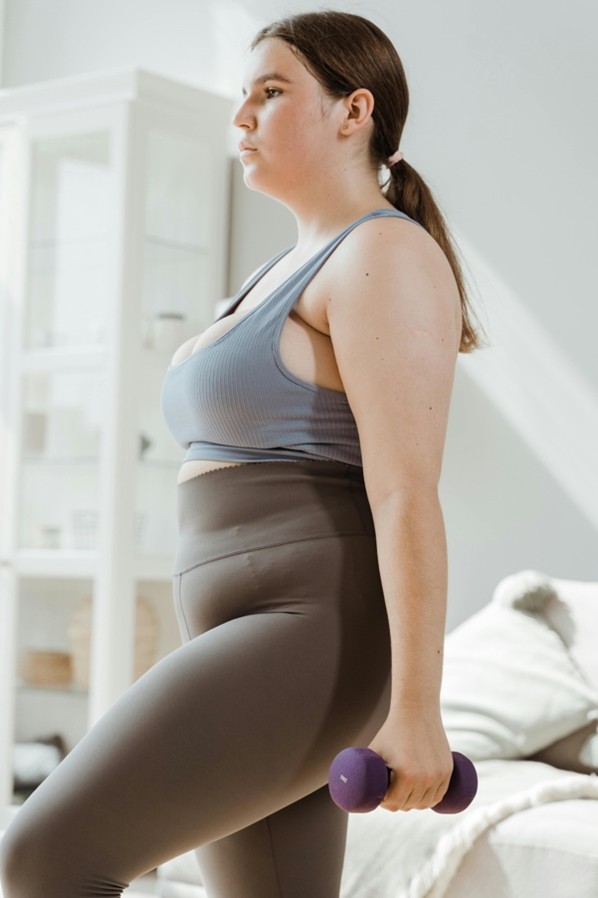
When the body becomes the project, life quietly shrinks.
Joy gets postponed until you feel “ready.” You hold off on photos. Delay the holiday, the beach day, the dinner out, the new clothes, the intimacy, the softness. You tell yourself you’ll show up fully once you’ve earned it.
And because the standard keeps moving, you end up restarting over and over again.
There’s also the mental and physical cost of constant monitoring. When you live in self-surveillance, your body stops feeling like a home and starts feeling like a performance. Stress rises. Tension builds. Your mind gets stuck in scanning mode: What did I eat? How do I look? Should I be doing more? Did I ruin it?
Self-improvement built on self-criticism doesn’t lead to freedom. It leads to vigilance. And that can become exhausting.
Reframing January: From Self-Surveillance to Self-Support
January doesn’t have to be about fixing. It can be about supporting the system you already live in.
Instead of treating January as a month to shrink yourself into a more acceptable version, you can treat it as a month of stabilising. Listening. Building safety. It’s a different foundation.
Self-support says:
- Not shrinking.
- Not toning.
- Not earning worth.
- Not proving I’m good enough.
It’s choosing to support your emotional wellbeing instead of managing your appearance. It’s aiming for more steadiness, not more pressure.
If you want a fresh start, you’re allowed to start where it actually matters: with how you care for yourself when you feel messy, tired, bloated, emotional, imperfect, human. Because that’s where real change lives.
Gentle, Non-Appearance Practices to Start the Year

You don’t need a dramatic overhaul to start building a different relationship with your body. You need small, repeatable actions that tell your brain: I’m safe with myself.
Here are a few invitations you can try this January:
1. Choose comfort-first clothing. Wear clothes that fit the body you have today. Not the body you’re trying to earn. When clothing pinches or requires you to hold in or “behave,” your nervous system reads it as danger. Soft, flexible, breathable clothing reduces threat and makes it easier to be present.
2. Make one daily self-trust promise and keep it. Not a list. One promise. Drink water. Eat breakfast. Step outside for five minutes. Stretch. Go to bed when you’re tired. Self-trust is built through follow-through, not through body control.
3. Reduce body checking. Body checking is a form of reassurance seeking. It feels like you’re “just seeing where you’re at,” but it usually spikes anxiety and keeps the cycle running. If you notice yourself scanning mirrors, taking photos, pinching, comparing, try a gentle experiment: check less, not more. Let your attention return to your life.
4. Anchor your mornings or evenings with regulation. A few slow breaths. A warm shower. A short walk. A candle and a book. A playlist while you make tea. It’s not self-care aesthetics. It’s nervous system support. When your body feels calmer, your thoughts tend to soften too.
5. Eat regularly instead of “starting over.” The “I’ll be good tomorrow” mindset keeps you trapped in the same dieting cycle. Regular nourishment is one of the fastest ways to tell your brain you’re not in danger. You don’t have to earn food. You’re allowed to be steady.
None of these are body goals. They’re safety cues. And safety is what allows confidence to grow.
A Different Kind of New Year
If this January feels different because you’re not punishing yourself, that’s not laziness. That’s growth. It can feel strange at first to step out of a culturally celebrated ritual, especially when so many people are shouting that discipline equals deprivation.
But you’re allowed to start the year without turning your body into a problem. If you want support that goes beyond willpower and resolutions, the Body Confidence Quiz can be a low-pressure place to begin.
And if you want a guided, step-by-step approach to building body confidence and self-love over time, The Roadmap to Body Confidence & Self Love (available as both a book and self-paced course) is designed for exactly this: breaking cycles, building self-trust, and learning how to feel safer and kinder in your body.
January doesn’t need a new body. It needs a supported one.
xxx

Hey I’m Natalie, Supporting women like you on their road to self-acceptance and building a positive body image.

View comments
+ Leave a comment