




Most conversations about body image focus on how we feel about ourselves in isolation, what we think when we look in the mirror, how we judge our appearance, or how we feel when we see photos of ourselves.
But body image doesn’t stay contained inside us.
It quietly shapes how we show up in our relationships, how safe we feel being seen, how we interpret other people’s behaviour, how much we allow ourselves to want, need, receive, and express.
It shows up in the moment you hesitate before leaning in for a hug, in the way you read meaning into a partner’s silence, in the way you apologise for taking up space, emotionally or physically, before you even know why you’re doing it.In other words, body image is not just personal.
It’s relational.
How body image affects relationships
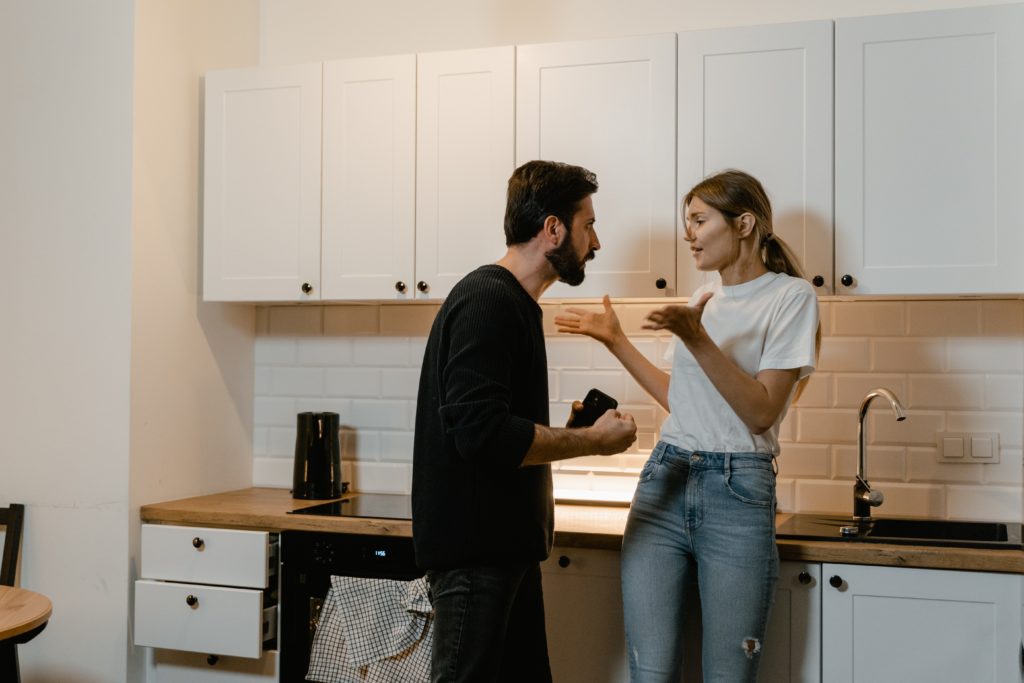
Research consistently shows that body dissatisfaction is linked to higher relationship stress, lower sexual satisfaction, increased comparison, and greater emotional withdrawal.
When you don’t feel good enough in your body, it doesn’t just affect how you feel about yourself. It affects:
- How open you feel to closeness
- How worthy you feel of love, desire, and care
- How safe you feel being emotionally or physically vulnerable
- How you interpret neutral or ambiguous behaviour from others
If you already carry the belief “I’m not enough,” your mind will look for evidence to confirm it. A delayed reply becomes rejection. A tired partner becomes disinterest. A small comment becomes proof you’re not desirable.
You might notice yourself checking your phone more often than you’d like, replaying a conversation in your head, or wondering if you said something wrong, even when nothing obvious has happened.
Not because those things are true, but because your nervous system is scanning for danger around your sense of worth.
Self-perception and emotional safety
We all have internal templates for what connection feels like.
These are shaped by our early experiences, the feedback we received, how safe it felt to be ourselves, and how secure or insecure connection felt growing up.
Some people naturally scan more closely for emotional cues than others. A change in tone, energy, or attention can feel very loud inside.
This is especially common in people with more sensitive or fast-reacting nervous systems, including many with ADHD or other neurodivergent traits, but it can happen for anyone whose system learned that connection felt uncertain, fragile, or conditional.
It doesn’t mean you’re overreacting.
It means your system is trying to protect you.
A little more on Neurodiversity, communication, and connection
For people who process the world intensely or quickly, relationships can feel both deeply meaningful and emotionally demanding.
You might notice that you:
- Think a lot about what others mean or feel
- Replay conversations looking for reassurance or mistakes
- Feel things quickly and strongly
- Struggle to stay regulated when you sense disconnection
This isn’t a flaw. It’s a nervous system pattern.
The difficulty arises when this sensitivity gets interpreted as something being wrong with you, rather than something that needs understanding, support, and self-trust.
A CBT lens on relational triggers

From a cognitive behavioural perspective, relationships often activate our deepest beliefs about ourselves:
- “I’m not enough.”
- “I’m too much.”
- “I’m unlovable.”
- “I’ll be rejected if I’m fully seen.”
When something happens in a relationship, a look, a comment, a pause, the mind fills in the meaning through those beliefs.
That meaning creates emotion.
The emotion drives behaviour (withdrawing, people-pleasing, over-explaining, shutting down).
That behaviour then shapes the relationship and reinforces the original belief.
So you pull back a little, or try a little harder, or go quieter than you really are, not because you want to, but because you’re trying to keep the connection safe.
Not because it’s true. But because the pattern is familiar and we can get trapped in unhelpful cycles.
What does all this mean and what can I do…
Working on body image and self-worth isn’t about liking your reflection more. It’s about creating emotional safety inside yourself. And emotional safety is what allows closeness, intimacy, playfulness, and depth to grow.
If this has resonated and you’d like support with your relationship with your body, your self-worth, or how these show up in your relationships, you’re very welcome to explore working with me.
You can find out more about my 1:1 coaching and how I support women to build confidence and emotional safety from the inside out by visiting my website or booking a free call to talk things through.
But I want you to remember that you don’t need to be more attractive, more confident, or more “together” to have meaningful relationships.
You need to feel safe being you.
xxx

Hey I’m Natalie, Supporting women like you on their road to self-acceptance and building a positive body image.

View comments
+ Leave a comment